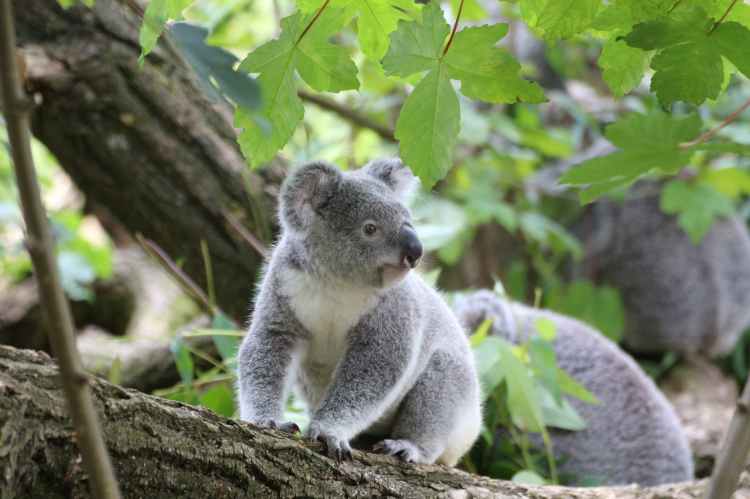
Drone survey and tree-growing activity in the Coastwatchers Eurobodalla Koala Recovery Project.
This project contributes to the Eurobodalla Koala Recovery Strategy by:
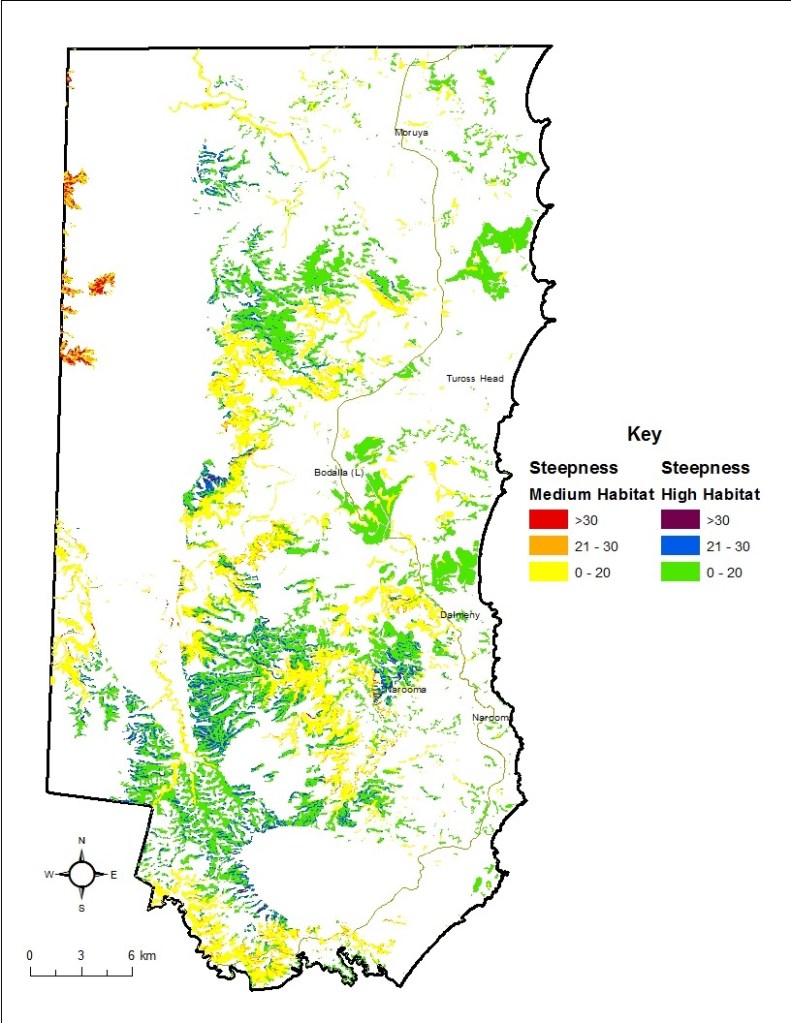
- modeling best habitat, at regional and local scale, taking into account potential home ranges and breeding corridors for recovery, in the context of the wider southeast NSW metapopulation
- searching for remnant koalas using thermal drones and later (in the rutting season) searching for resident or dispersing koalas using song metres
- planting 6,000 trees at places strategically selected as a result of the GIS and drone exercises
Major partners with The Coastwatchers Association Inc in this project are Forestry Corporation NSW and National Parks and Wildlife Service, over whose tenures the drones are flying, launched from adjacent private properties. 85% of the Eurobodalla and lower Shoalhaven’s landscape is forested, mostly as State Forest and National Park. Koalas were readily visible in several local hotspots until the mid-20th Century, but the population has now become so sparse we fear functional extinction, hence our advocacy for a recovery strategy.
Our GIS results will be publicly accessible by the end of May, in the form of a very exciting digital StoryMap.
Drone and song metre data will also be publicly available and shared with the NSW Government’s Koala Strategy teams, who are trying to construct a cohesive, whole-of-state database encompassing the diverse initiatives currently occurring.



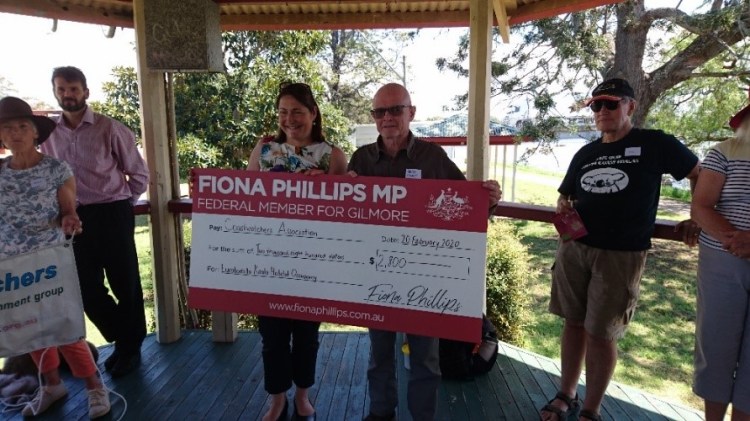
Read article on grants award here

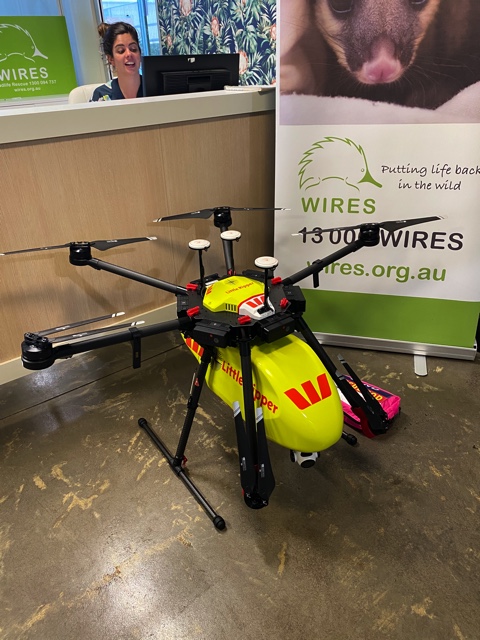
EKP are involved in supporting the latest science in relation to koalas and their habitat.
What we do;
Our volunteer team:
- conducts ongoing citizen science projects, such as the East Lynne Carrying Capacity Study 2021 and the Review of Habitat Significance of Bodalla State Forest 2021
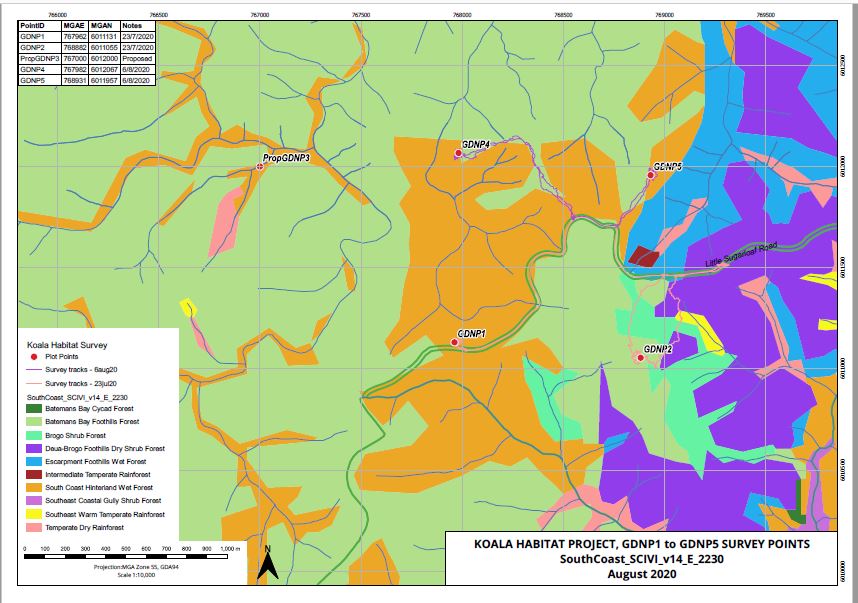
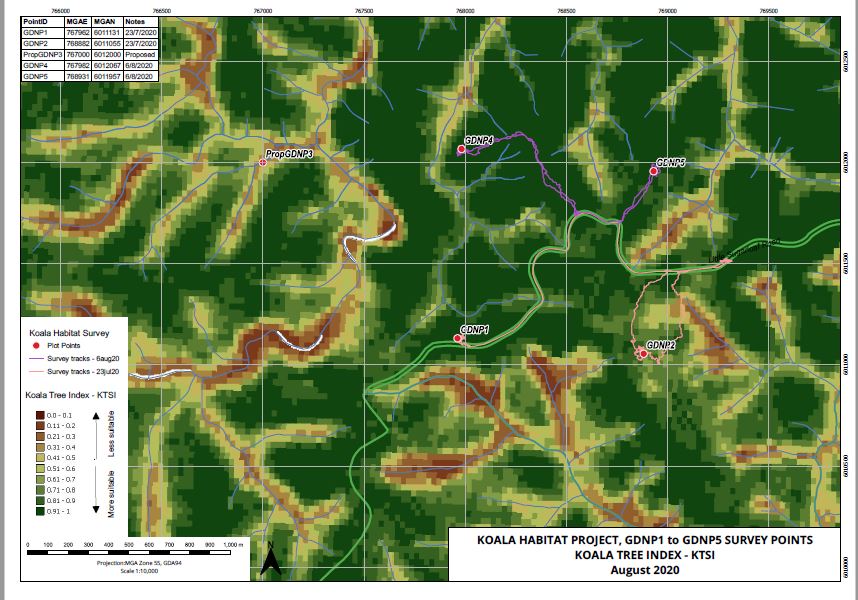
- uses the free software QGIS to map local koala habitat suitability, tree indices, vegetation types, topography, geology, soil and watercourses
- conducts habitat plot surveys on private properties, helping landholders understand their property’s contribution to the wider koala habitat landscape, adding to the EKP’s database, adding to the NSW Government’s database and ground-truthing wider-scale habitat modelling
- monitors emerging local knowledge
- monitors emerging contemporary research
Plot surveys
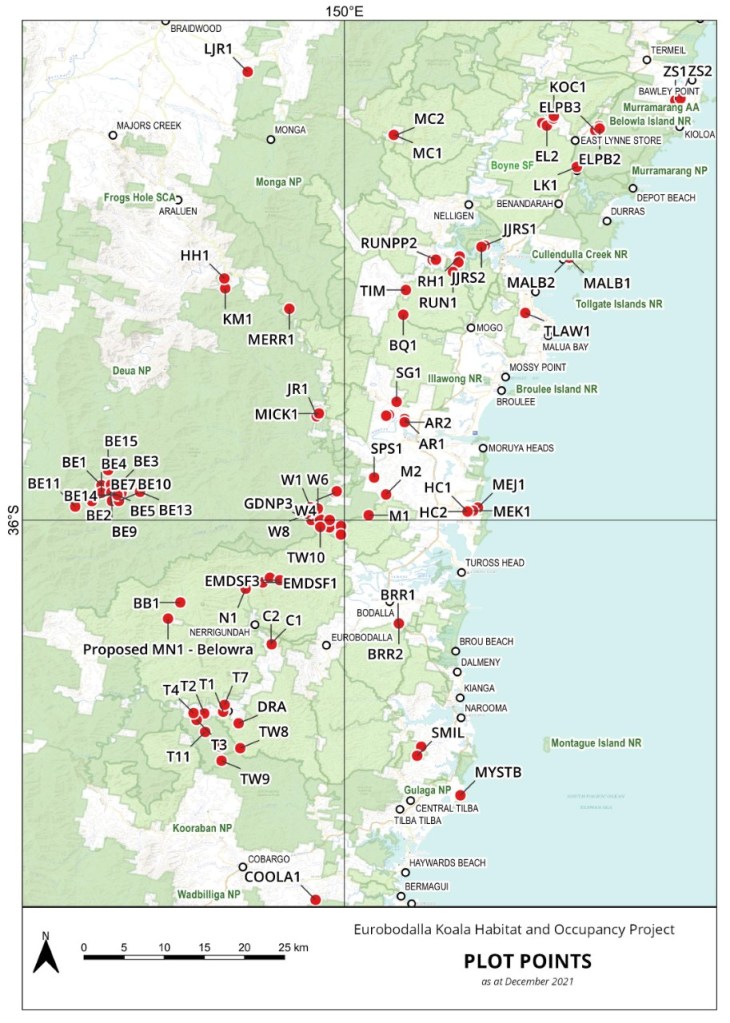
This is the full plot points map, as of December 2021, of all the koala habitat surveys done by our volunteers since the Eurobodalla Koala Project began fieldwork in 2012.
Datasheets relating to our 2020-2021 plot surveys can be found using this link 2020-2021PlotSurveys
Our citizen science publications
The Eurobodalla Koala Project Pilot Study 2013 is available at this link EKP Pilot Study
The pilot study:
- established a theoretical base for our citizen science approach
- provided a comprehensive literature search and reference list
- explored Eurobodalla koala history
- tested a model of analysis
- modeled Shire-wide potential habitat
The Bendethera Report 2013 is available at this link The Bendethera Report
The Bendethera expedition:
- tested a comprehensive set of habitat factors used for our research
- drew a conclusion about the habitat suitability of the Bendethera location
The Wamban-Nerrigundah Report 2020 is highlighted elsewhere on this website, and available through this link Wamban Nerrigundah Report
This Commonwealth-funded study:
- confirmed the Wamban-Nerrigundah patch as a potential low-density breeding corridor between two places of local koala historical significance
- gave special attention to the impact of the 2019-2020 wildfire on local koala habitat
- updated our knowledge and techniques
- produced a large repository of data, accessible to this website’s users
The Revised Eurobodalla Koala Recovery Strategy 2021 is also highlighted elsewhere on our website, and available through this link
The Revised Recovery Strategy:
- updates the previous 2013 version
- provides principles, practical actions and resources for all community sectors to engage in local koala recovery
- sets the stage for our next few years of work
The Koala Carrying Capacity Study of the East Lynne Area 2021 is now available at this link LINK
The East Lynne Carrying Capacity Study:
- used GIS mapping, analysed Forestry Corporation NSW Harvest Plans and EKP plot survey data from private properties, examined Murramarang National Park information, and took advice from local landholders
- concluded the area could support up to four resident koala groups as a best-case scenario, if natural post-wildfire recovery is accompanied by deliberate land management intervention
The Review of Koala Habitat Suitability of Bodalla State Forest 2021 is now available at this link .
- The Review argues Bodalla State Forest, where a sighting was reported in October 2021, must be a priority focus for any Eurobodalla-wide koala population revival.
- With its remnant habitat and history of koala presence, the forest is a viable location for home ranges of about 350 hectares each.
- Bodalla State Forest is also needed as a breeding connector for a sustaining regional koala metapopulation.
- The review lists challenges for land managers in and near Bodalla State Forest if local koalas are to revive. Threats to address are landscape drying, further severe wildfire impacts, atmospheric carbon dioxide affecting leaf nutrients, degraded soils, dieback, historical clearing of the Tuross River lowlands, over-intensive logging and new clearing for urban development.
- Between 2022 and 2024, the Coastwatchers Great Eastern Ranges Project (see below) hopes to make a start by helping adjacent private property owners survey and rehabilitate their spaces.
What next?
The anticipated Coastwatchers 3-year WWF-GER project did not extend beyond June 2024 and the funding was halved, so the planned community survey and drone work did not eventuate. Instead, priority was given to iNaturalist training sessions for community groups, to encourage greater use of technology by the general public in recording observations of significant fauna. 1,986 koala feed species and erosion control stems were planted at Bawley Point, Reedy Creek and Moruya River. These were supplemented by stems planted under the Coastwatchers BLERF project.
Commonwealth-funded Eurobodalla Koala Recovery Project
Fortunately, we were successful in our application under the Commonwealth Saving Koalas Community Grant program, for a local initiative called the Eurobodalla Koala Recovery Project.

‘This project received grant funding from the Australian Government
under the Saving Koalas Fund.’
@TSCommissioner
@dcceeww
Our project’s goal is to contribute to the Eurobodalla Koala Recovery Strategy, whose aim is revival of the low-density population in the Eurobodalla and lower Shoalhaven region, to the point where confidence about non-extinction is established.
The importance of connectivity with the wider metapopulation in adjacent regions given priority by the NSW Koala Strategy, is acknowledged in this project.
The project timeframe is 14th September 2023 to 31st August 2024, with a budget of $200,000.
The three components of the project are:
- a GIS modelling exercise to enhance and professionalise Coastwatchers’ existing citizen science koala habitat models
- a drone survey to look for remnant koalas and/or other fauna and relevant habitat features such as tree canopy cover
- planting 6,000 selected tree species on strategic sites informed by the GIS and drone data, to rehabilitate home ranges and breeding corridors
The project is being delivered through:
- engagement of a project administrator to ensure local delivery, including liaison with project partners, contractors, suppliers and landholders, record-keeping, reporting and evaluation
- pre-ordering of seedlings, being grown for Autumn 2024 planting
- the GIS contract (for completion May 2024)
- the planting and associated works contract (schedule pre-booked for stem planting by Autumn 2024)
- the drone contract (schedule pre-booked for completion by April 2024)
Detailed description of project, per Commonwealth Simple Grant Agreement, including the project scope and key activities
The guiding document is the Eurobodalla Koala Recovery Strategy https://eurokoalas.com/wp-content/uploads/2021/07/recovery-strategy-revised-edition-as-at-july-2021.docx.pdf
Detailed background to the Strategy, including a decade of local citizen science initiatives and previous funded projects is available at https://eurokoalas.com/koala-science/ The lead partner is The Coastwatchers Association Inc. Other partners are Batemans Bay Local Aboriginal Lands Council Rangers, Campbell Page EcoCrews, Eurobodalla Shire Council, South East Local Land Services, Forestry Corporation NSW Southern Region, National Parks and Wildlife Service South Coast Branch and private business Urban Rewild. Multiple private landholders constitute the on-ground partners for planting and drone survey purposes.
A project administrator will be appointed to coordinate activities and liaise closely with partner agencies and landholders.
A GIS specialist will be contracted to refine the set of polygons previously identified for mapping Eurobodalla-wide home ranges and breeding corridors. These polygons are aligned to surrounding Local Government Areas which have priority in the NSW Koala Strategy, namely Bega Valley, Cooma-Monaro and Queanbeyan-Palerang, as well as Shoalhaven (which, like Eurobodalla, doesn’t have NSW Koala Strategy priority but has remnant koalas at near-extinction levels and is important for linkages with Goulburn-Mulwarree, Wingecarribee and Campbelltown).
A comprehensive thermal drone survey, utilising grid patterns in fifteen 100-hectare patches (or equivalent) will search for remnant koalas, providing data for real-time or potential residency and movement patterns, to be compared with historical data already in the Coastwatchers records, on koala presence and habitat potential.
Revegetation plantings at 6 locations will be strategically placed according to the identified home ranges and breeding corridors.
Under guidance from partner agencies’ professional ecologists, species for planting will be site-specific. Based on the NSW Review of Koala Use Tree Species 2018 and the ANU
Report on Region Specific Habitat 2021, Eucalypt species include:
• Eucalyptus cypellocarpa
• Eucalyptus tereticornis
• Eucalyptus bosistoana
• Eucalyptus tricarpa
• Eucalyptus longifolia
• Eucalyptus maidenii
• Eucalyptus muelleriana
• Eucalyptus globoidea
• Eucalyptus botryoides
• Eucalyptus obliqua
• Eucalyptus saligna
• Eucalyptus viminalis
The plantings will mesh with others coordinated by Coastwatchers under its existing funded WWF-GER (World Wildlife Fund/Great Eastern Ranges) and BLERF (Bushfire Recovery) projects.
Summary of the expected project outcomes.
Precise project outcomes according to its budgeted components are:
• Measurable improvement in agency and landholder engagement and collaboration from a koala habitat and revival perspective
• Publicly available mapping of potential and real-time home ranges, breeding corridors and their relationship to the inter-LGA metapopulation
• Statistics, imagery and multi-layered digital mapping of koala residency, koala movement and/or koala habitat features across the whole LGA
• Revegetation plantings on 6 strategic locations, at a total of 180 hectares replanted with 6,000 stems
Broader outcomes include engagement of multiple collaborating agencies and private landholders in implementing key components of the Eurobodalla Koala Recovery Strategy, specifically:
• Planning and approvals
• Rehabilitation of home range areas
• Vegetation connectivity
• Population monitoring
• Dog and fire management
• Community awareness
• Proactive attention to climate change and business initiatives
• Community and agency capacity building and upskilling.
The ultimate goal is actual increase in wild koala numbers in the Eurobodalla LGA. Previous research suggests this might become apparent between 2024 and 2031 https://eurokoalas.com/wp-content/uploads/2021/03/report_wamban-nerrigundah-project_gilmore-electorate.docx.pdf
Useful links
Australian National University – Search “ANU Koala Research” Link to search page
University of Sydney Koala Health Hub link to hub
Koala Clancy Foundation link to foundation
New South Wales Department of Environment, Climate Change and Water link to NSW ECCW

 eurokoalas.com